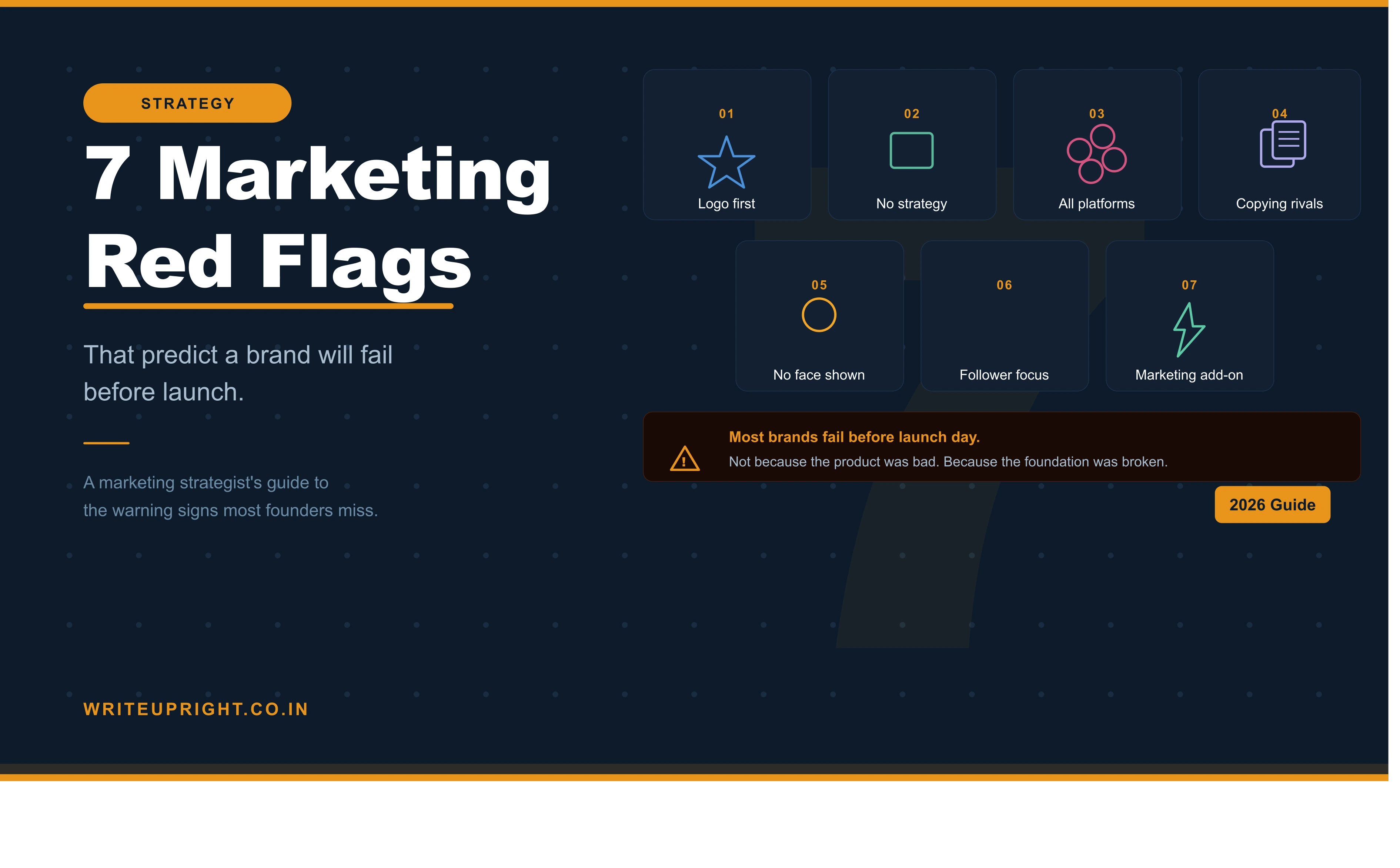
Most brands don't fail because the product is bad. They fail because the marketing foundation was broken long before launch day.
As a marketing strategist, there are certain patterns I see repeatedly - and honestly, they're easy to spot within the first meeting. The scary part? Most founders don't even realize they're making these mistakes until they've already burned through time, money, and momentum.
If you're building a brand in 2026, these are the biggest marketing red flags you need to avoid.
1. They Start With a Logo Instead of a Customer
One of the biggest mistakes new brands make is focusing on aesthetics before understanding their audience.
The first thing they show is:
- A logo
- Premium packaging
- A Pinterest-inspired mood board
- Brand colors and fonts
But when asked, "Who exactly is your customer?" the answer is usually: "Everyone."
That's not a brand strategy. That's an expensive design project.
The brands that actually win know their customer deeply before they touch branding. They can describe:
- Their audience's biggest frustration
- Their buying triggers
- Their lifestyle
- Their fears and desires
- Why they would switch from competitors
Good marketing starts with customer psychology - not color palettes.
2. Their Strategy Is "We'll Figure It Out After Launch"
This is one of the costliest mistakes founders make.
They assume:
- Launch first
- Run some ads
- Post on Instagram
- "Figure it out later"
But after launch comes panic:
- No sales
- High ad costs
- Random marketing decisions
- Constant rebranding
- Wasted budgets
Strategy is not optional anymore. It's survival.
Many startups spend lakhs in their first few months with almost no ROI because they confuse activity with direction. Without a clear positioning strategy, content plan, offer structure, and customer journey, marketing becomes reactive instead of profitable.
The brands that grow consistently are usually the ones that planned before spending.
3. They Want to Be on Every Platform From Day One
Instagram. YouTube. LinkedIn. X. Pinterest. Threads.
Trying to dominate every platform immediately is usually a sign the brand has no real focus.
The strongest brands grow by going deep on one platform first:
- They understand the audience
- Learn the algorithm
- Build a loyal community
- Create repeatable content systems
Only after mastering one channel do they expand.
Brands that try to be everywhere too early usually end up:
- Inconsistent
- Burned out
- Confusing in messaging
- Forgettable
Attention compounds when focus exists.
4. They Copy Competitors Instead of Building Their Own Strategy
A common sentence in client meetings is: "But this worked for XYZ brand."
What founders forget is that strategy only works within the right context.
That competitor may already have:
- Years of trust
- Brand recognition
- Existing customers
- Influencer relationships
- Strong retention systems
- Bigger budgets
Copying tactics without understanding the ecosystem behind them is dangerous.
Successful brands don't blindly imitate. They study competitors, understand market gaps, and build positioning that fits their own audience.
You don't need a copied playbook. You need a strategy built for your business model.
5. The Founder Refuses to Show Their Face
In 2026, faceless brands are at a disadvantage.
People trust people more than logos.
This doesn't mean every founder must become a full-time influencer. But audiences want:
- Human connection
- Founder opinions
- Behind-the-scenes moments
- Real stories
- Authenticity
Even minimal founder visibility can massively improve:
- Trust
- Conversion rates
- Brand recall
- Content performance
Meanwhile, competitors who consistently show up online are building emotional connection while others hide behind Canva carousels.
Founder-led branding is no longer optional in many industries. It's a competitive advantage.
6. They Measure Success by Followers Instead of Revenue
One of the biggest vanity traps in modern marketing is follower obsession.
"10K followers" sounds impressive. But the real question is: did the business make money?
Followers alone don't build a company. Revenue does.
Brands often celebrate:
- Views
- Likes
- Reach
- Engagement
While ignoring:
- Conversion rate
- Customer acquisition cost
- Retention
- Profit margins
- Repeat purchases
Attention without monetization is just entertainment.
Smart brands focus on metrics that actually grow the business - not just the ego.
7. They Treat Marketing as an Add-On Instead of the Core Engine
Many founders still think marketing starts after the product is ready.
In reality, marketing should shape:
- The offer
- Pricing
- Packaging
- Messaging
- Positioning
- Customer experience
The best brands are built around how customers think, buy, and emotionally connect.
Marketing isn't the decoration added at the end. It's the system that determines whether people care in the first place.
Final Thoughts
Most failing brands show warning signs before they even launch.
The difference between brands that scale and brands that disappear usually comes down to:
- Customer understanding
- Strategic focus
- Clear positioning
- Consistent execution
- Founder visibility
- Revenue-driven marketing
The internet is crowded now. Good design alone is not enough.
The brands that win in 2026 will be the ones that understand people better than their competitors do.